
Facebook's solar-powered internet plane takes flight
Aquila drone, which at cruising speed uses same wattage as three hairdyrers, uses lasers to beam internet to remote regions
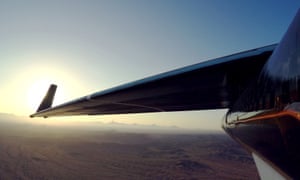 |
| The Aquila Facebook plane will be part of a fleet providing internet access to parts of sub-Saharan Africa and beyond. Photograph: Facebook |
Facebook has announced the first successful test flight of a high-altitude solar plane to bring internet access to remote parts of the world.
 |
| The Aquila drone ascends from the runway. Photograph: Facebook |
The Aquila drone has the wingspan of an airliner but weighs less than a car. When cruising it consumes just 5,000 watts – the same as three hairdryers or a powerful microwave.
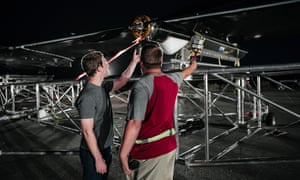 |
| The final adjustments are made to the drone before takeoff. Photograph: Facebook
The first flight took place on 28 June in Arizona. Facebook said the test went better than expected and that Aquila’s 96-minute flight was three times longer than planned.
Aquila was developed in Bridgwater, Somerset, and the drone, designed to fly non-stop for three months, will use lasers to beam down internet access to remote areas without online capacity.
Facebook has a team of engineers at Bridgwater from fields of expertise including aerospace, avionics and software and who had previously worked at organisations such as Nasa, Boeing and the Royal Air Force.
|
 |
| Facebook founder Mark Zuckerberg and his team watch the drone take flight. Photograph: Facebook |
Mark Zuckerberg, Facebook’s chief executive, revealed in March 2015 that the company had been testing drones in the skies over the UK.
Facebook intends Aquila to be part of a fleet of planes that will provide the internet to 4 billion people in sub-Saharan Africa and other remote regions that do not have access currently.
Jay Parikh, Facebook’s head of engineering and infrastructure, said in a blog: “We’re encouraged by this first successful flight, but we have a lot of work ahead of us … In our next tests, we will fly Aquila faster, higher and longer, eventually taking it above 60,000 feet.”

No comments:
Post a Comment